
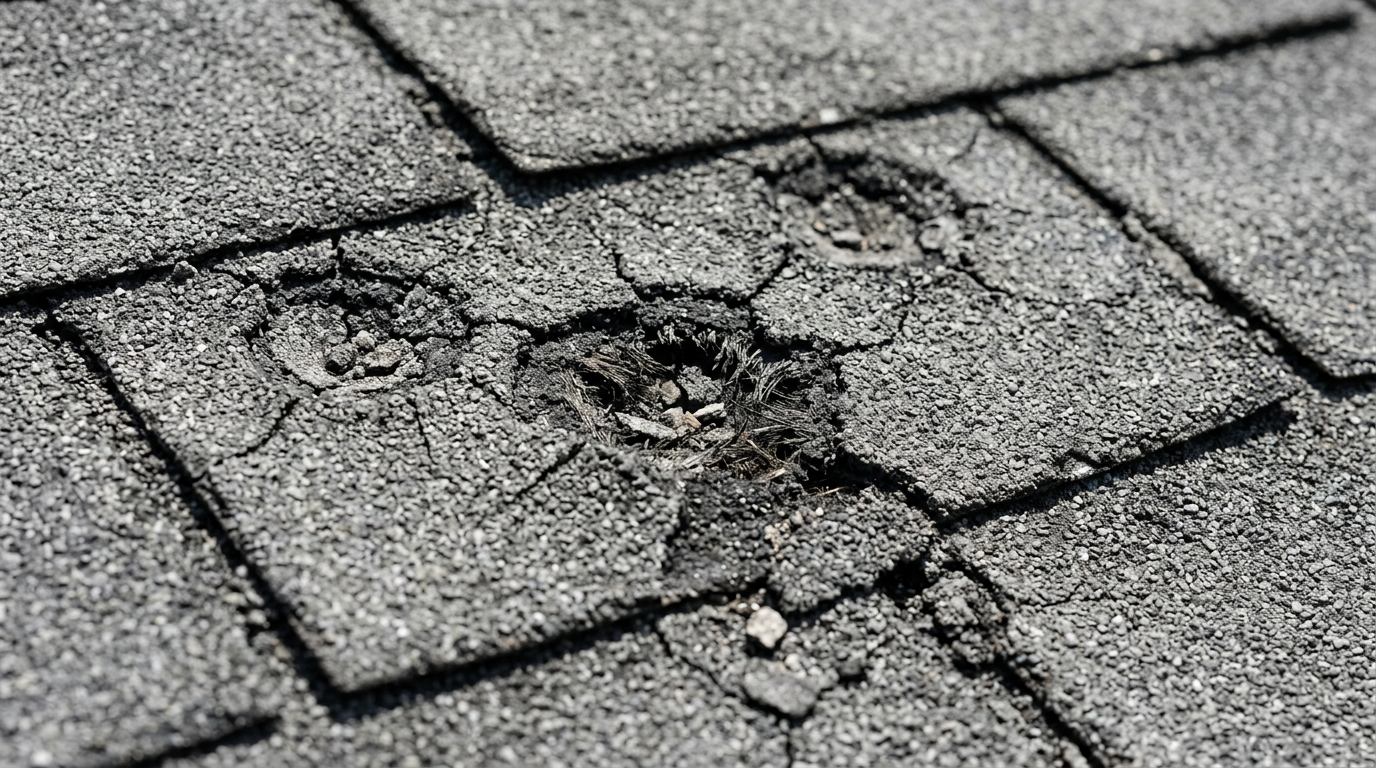
- Licensing: Rules vary by state and city, so confirm the company meets local licensing requirements where applicable
- Insurance: Ask for proof of general liability and workers’ compensation coverage
- Local presence: Look for a business with a physical office, local references, and a history of serving your area
When a storm damages your roof, the first contractor you call can shape everything that follows: the inspection, the repair plan, the paperwork, and even how smoothly the job goes.
The challenge is that storm damage often brings urgency, and urgency makes it easier to miss warning signs. A careful comparison process can help you choose a roofer who is qualified, responsive, and clear about what they will and will not do.
→ Call (678) 737-7062 for a free roofer estimate — answered 24/7, no obligation.
This guide focuses on the practical steps homeowners can use after wind, hail, or heavy rain damage.
The goal is not to find the cheapest bid at all costs, but to find a roofer who is licensed where required, insured, and willing to explain the work in plain language.
Start with the damage, not the pitch
Before you invite anyone out, document what you can safely see from the ground. Take photos of missing shingles, fallen branches, dented gutters, interior stains, and any debris around the home.
If there is active leaking or a visible opening, protect the area as best you can and call a professional quickly.
It helps to know the difference between temporary stabilization and a full repair or replacement. A reputable roofer should be able to explain whether your roof needs an emergency tarp, isolated repairs, or a broader project.
If a contractor jumps straight to a full replacement without showing you why, ask for a clearer explanation and supporting photos.
Check the basics before you schedule an estimate
→ Get (678) 737-7062 on the line and price your job now — answered 24/7, no obligation.
Storm season often brings out excellent contractors, but it also attracts opportunists. Before you book an appointment, verify a few essentials:
- Licensing: Rules vary by state and city, so confirm the company meets local licensing requirements where applicable.
- Insurance: Ask for proof of general liability and workers’ compensation coverage.
- Local presence: Look for a business with a physical office, local references, and a history of serving your area.
- Manufacturer or trade certifications: These can be useful, but they should supplement, not replace, basic vetting.
It is also reasonable to ask how long the company has been working on storm-related roof projects. That does not guarantee quality, but it can tell you whether they are accustomed to documenting damage and coordinating with homeowners.
Compare estimates line by line
Roofing estimates should do more than give a single number. A useful estimate usually identifies the scope of work, the materials, the cleanup plan, and any assumptions the contractor is making about the roof’s condition.

 Posts
Posts

